

Anti-Spoofing in Maritime Navigation
- Home
- »
- Anti-Spoofing in Maritime Navigation
GNSS Resilience for Secure Onboard Positioning
This page highlights GPS/GNSS spoofing as a real threat to maritime navigation, contextualizing typical impacts on operations and safety. It also outlines technical approaches to detect such events and handle them in a controlled manner. Anti-spoofing is not considered in isolation, but is understood as part of a secure maritime system and network architecture — an approach that VEINLAND follows in its solutions.
Anti-Spoofing in the Maritime Environment: Detecting and Countering GPS/GNSS Spoofing
How can a ship be protected if its GPS suddenly shows incorrect positions? Modern ships rely heavily on GNSS (Global Navigation Satellite Systems) like GPS for navigation, timekeeping, and numerous downstream processes on board. GPS spoofing – the deliberate manipulation of satellite signals to generate false position or time information – and GNSS jamming as a form of signal interference represent real risks.
Reports from shipping companies, insurers, and maritime analysis platforms show that GNSS interference, and in particular targeted spoofing incidents, have increased in several regions, especially in geopolitically sensitive areas. The observed incidents range from short-term disruptions to longer-lasting manipulation of navigation data. The potential consequences are significant: navigational deviations, increased collision and grounding risks, as well as operational and liability-related consequences.
Shipping companies, Electro-Technical Officers (ETOs), inspectors, and system integrators are therefore faced with the task of systematically increasing the resilience of their ships against GNSS manipulation. This necessity is further underscored by regulatory requirements and classification standards, in particular by IMO Resolution MSC.428(98).

Spoofing Resilience through System Architecture
GPS/GNSS Spoofing – a Hard-to-Detect Threat to Navigation
GPS spoofing refers to the intentional transmission of counterfeit navigation satellite signals that appear plausible to the receiver and are sometimes stronger than the original signals. As a result, false position, speed, or time information can be generated. In contrast, GNSS jamming causes the receiver to lose any usable satellite signal. While jamming is usually obvious (loss of signal, alarms), spoofing is a more insidious form of attack because it deceives.
Spoofing is especially critical because the navigation system seemingly continues to operate normally. The data provided appears consistent, but is in fact incorrect. Without additional plausibility checks or monitoring, such an incident can go undetected for an extended period.
A frequently cited example is a spoofing event in the Black Sea (2017) where numerous ships suddenly reported positions that placed them far inland. More recent reports from various regions confirm that targeted manipulations of GNSS navigation are no longer isolated incidents, but occur with increasing frequency in certain areas and situations.
Why Spoofing is Especially Critical.
GNSS spoofing differs fundamentally from traditional navigation disruptions in several ways:
- Hard to detect: Unlike jamming, GNSS reception remains active with no immediate loss of signal.
- Gradual deviations: Manipulations can begin gradually with small position shifts that initially fall within the noise or tolerance range of the navigation context.
- Systemic impacts: Many onboard systems rely on GNSS data — including ECDIS, AIS, autopilots, and time servers. A compromised source can therefore affect multiple systems at once.
Without appropriate countermeasures, false position data may be processed unchecked by onboard systems, significantly compromising navigational safety.
Possible Consequences: From Navigational Deviations to Liability Issues
A successful spoofing incident can cause a ship to deviate from its planned course without being noticed. As a result, the risk of collisions, groundings, or unintended entry into restricted areas increases. This is especially critical in narrow waterways, during offshore operations, or when approaching ports.
Aside from the immediate safety risks, legal and organizational questions arise. In the event of an incident, shipping companies must be able to demonstrate that they have taken appropriate technical and organizational measures to address cyber risks. GNSS spoofing is therefore not just a technical problem, but an operational risk that must be integrated into existing safety and compliance structures.
Technical Approaches to Counter Spoofing and Jamming
To enhance GNSS resilience, a variety of technical approaches are available:
- Anti-jam antennas and filters that suppress interference signals from specific directions.
- Modern GNSS receivers with integrated detection and plausibility-check functions.
- Redundant navigation sources (e.g., multi-GNSS, inertial navigation, or radar fixes).
- Future authentication methods, such as Galileo OSNMA.
- System and network-based monitoring that continuously evaluates position data.
None of these measures is sufficient on its own. What is crucial is a multi-layered approach combining sensors, system architecture, and monitoring.
The VEINLAND Approach: Spoofing Resilience through System Architecture
VEINLAND takes a systemic approach to anti-spoofing. With SAJO-Light, VEINLAND offers a solution for monitoring and evaluating GNSS signal quality, designed for integration into maritime onboard networks.
The GNSS data stream is routed through an IEC 61162-460-compliant gateway and continuously checked for anomalies. If inconsistencies or threshold breaches are detected, alarms can be triggered and the forwarding of position data can be restricted in a controlled manner.
The goal is not to physically prevent spoofing, but to make its effects manageable and avoid the uncontrolled distribution of manipulated data within the onboard network.
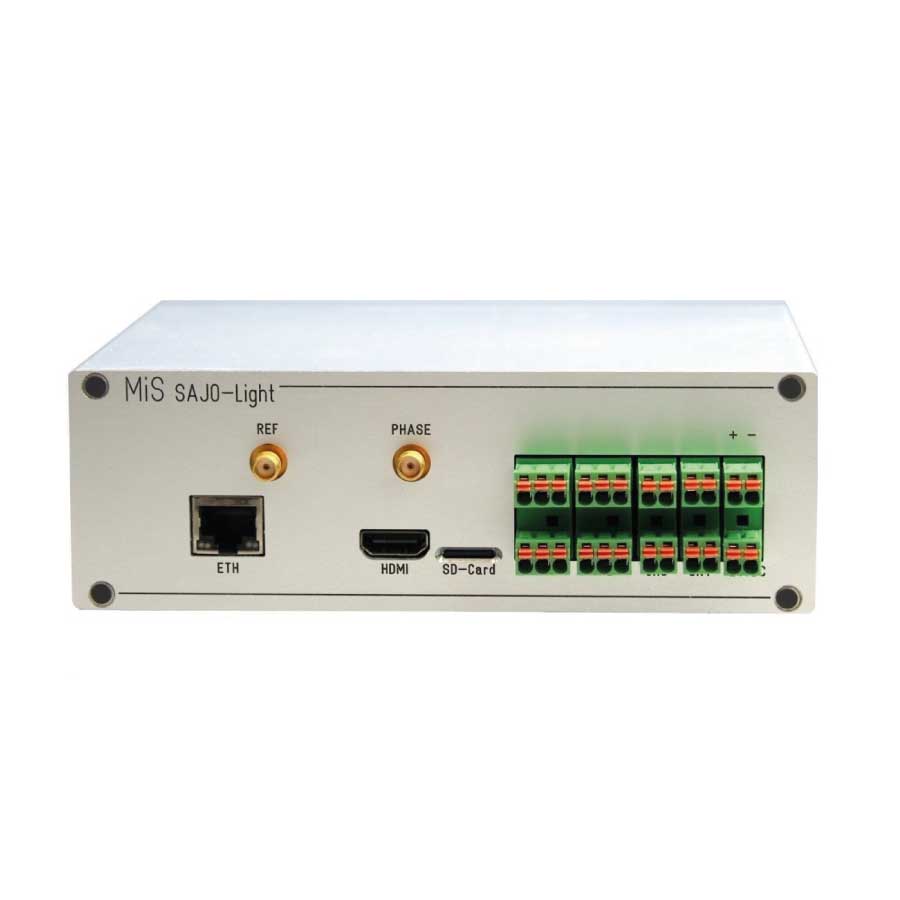
SAJO-Light complements maritime navigation systems by providing independent monitoring of GNSS signal quality, supporting the early detection of spoofing and jamming incidents.
Contact us to discuss anti-spoofing and GNSS resilience in the maritime environment.
Standards and Compliance
GNSS spoofing is closely linked to regulatory requirements:
- IMO MSC.428(98) requires the integration of cyber risks into the Safety Management System.
- IACS UR E26 and E27 define mandatory cyber security requirements for newbuilds from July 2024 onward.
- IEC 61162-460 describes the secure architecture of maritime navigation and communication networks.
VEINLAND’s products and system concepts are aligned with these requirements and support shipping companies and integrators in implementing security architectures that are auditable and traceable.
GNSS spoofing is not a theoretical scenario but a real risk for maritime navigation. The challenge lies less in complete prevention and more in early detection, transparent assessment, and controlled handling of such events.
VEINLAND pursues a pragmatic approach that combines technical security, system transparency, and regulatory requirements — without unnecessary complexity, but with clear impact.
For technical inquiries or further information, please use our contact form.